Workforce Management SaaS · Custom software
HyrjeDalje
Multi-Tenant Workforce & Attendance Platform
Architected and led a Next.js/NestJS workforce platform on EKS, combining PostgreSQL and Prisma with queued attendance processing, report exports and operational alerts.
Visit live site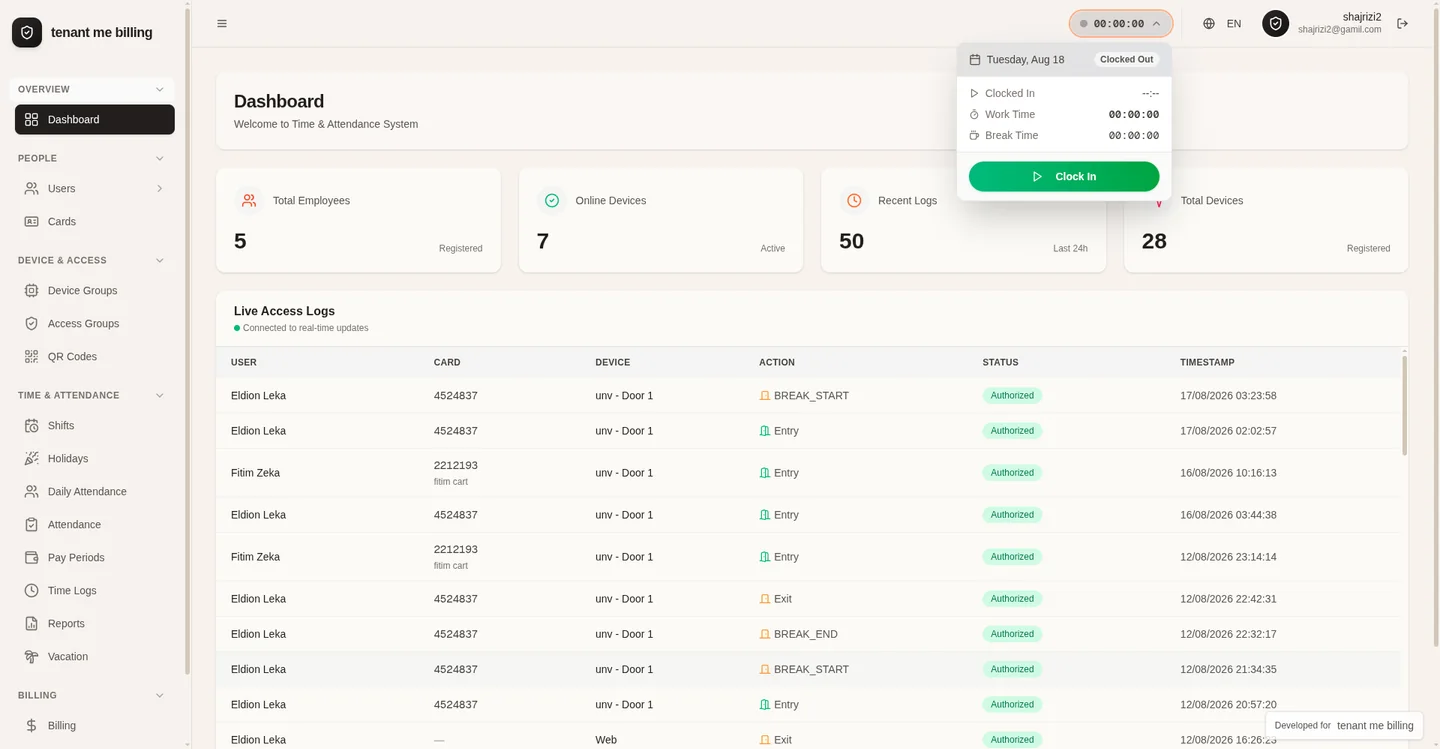
Platform overview
HyrjeDalje is a multi-tenant workforce and attendance platform used by multiple organizations. It began around attendance and access-related requirements for elevators and buildings, then expanded into a broader workforce-management system for companies.
The platform brings employee records, physical attendance devices, schedules, leave, corrections, reporting and payroll-related calculations into one connected product.
Supporting growth across tenants and devices
The system needed to support multiple organizations, different workforce workflows and integrations with physical attendance devices while continuing to grow beyond its original attendance use case.
That required an architecture that could keep tenant concerns, business modules and external device integrations organized as the product expanded.
Architecture and technical leadership
As System Architect & Tech Lead, I selected the technology stack, designed the overall architecture, made core technical decisions and led implementation across frontend, backend and integration concerns.
I led a development team of three engineers and maintained technical oversight across the platform.
Platform capabilities
- Multiple organizations and client workspaces
- Employee and attendance-device management
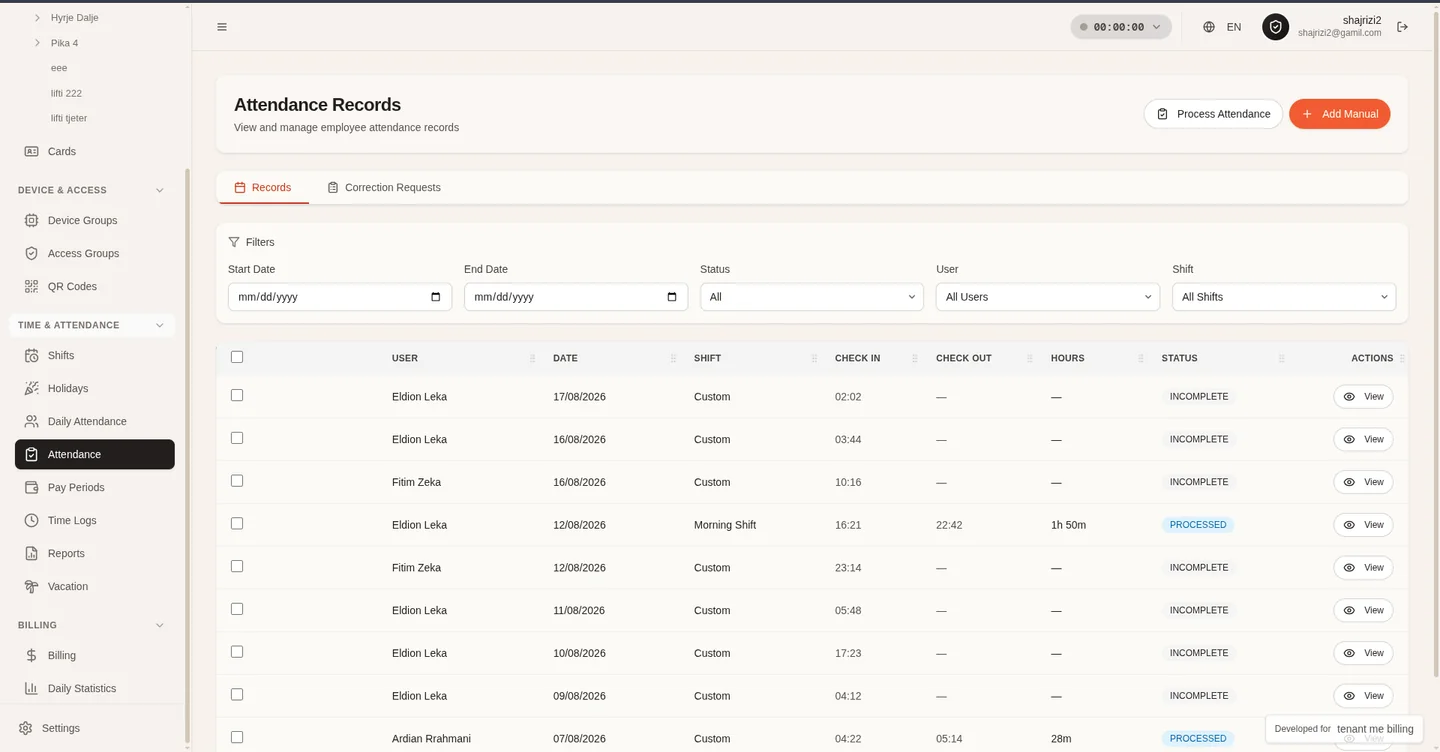
- Attendance records and correction workflows
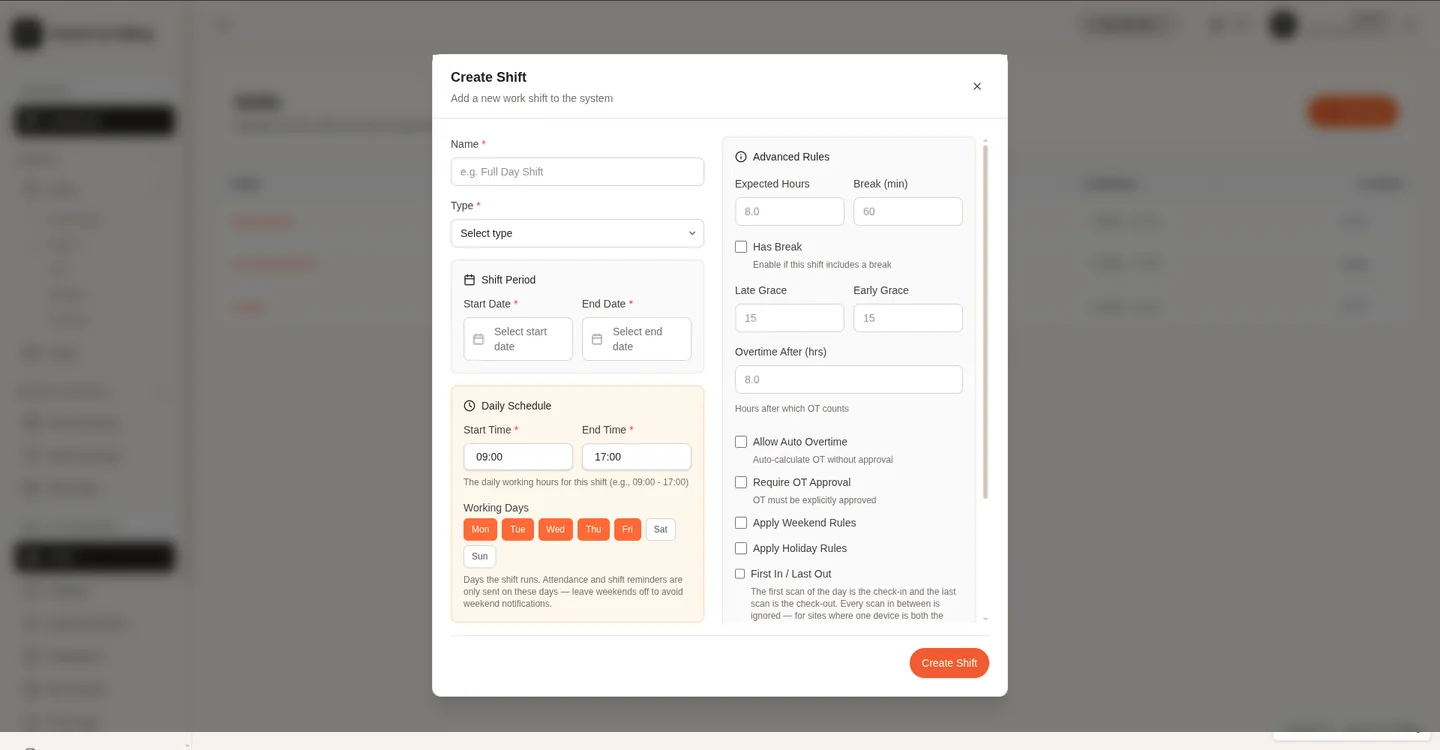
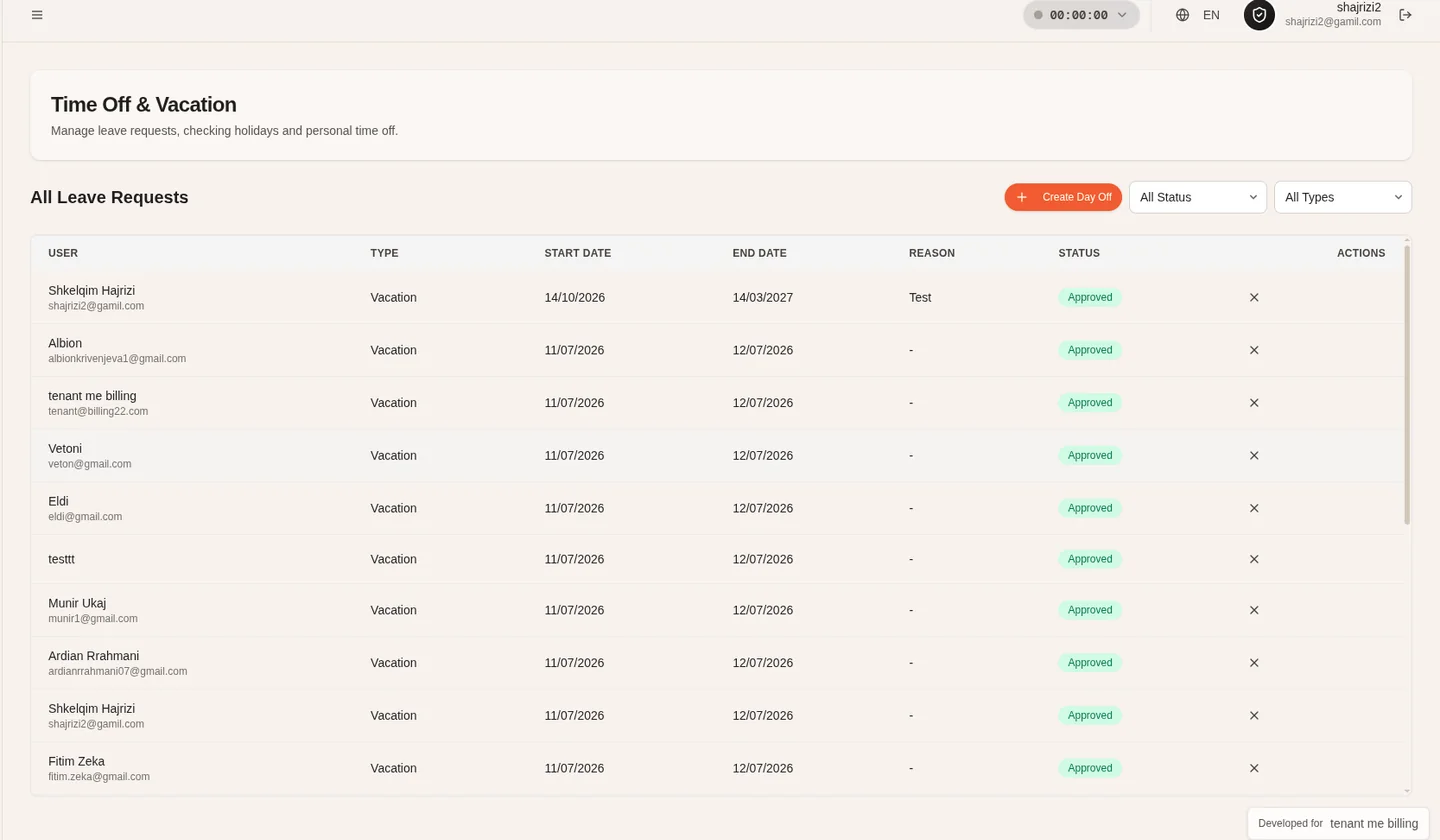
- Work shifts, schedules, leave and vacation
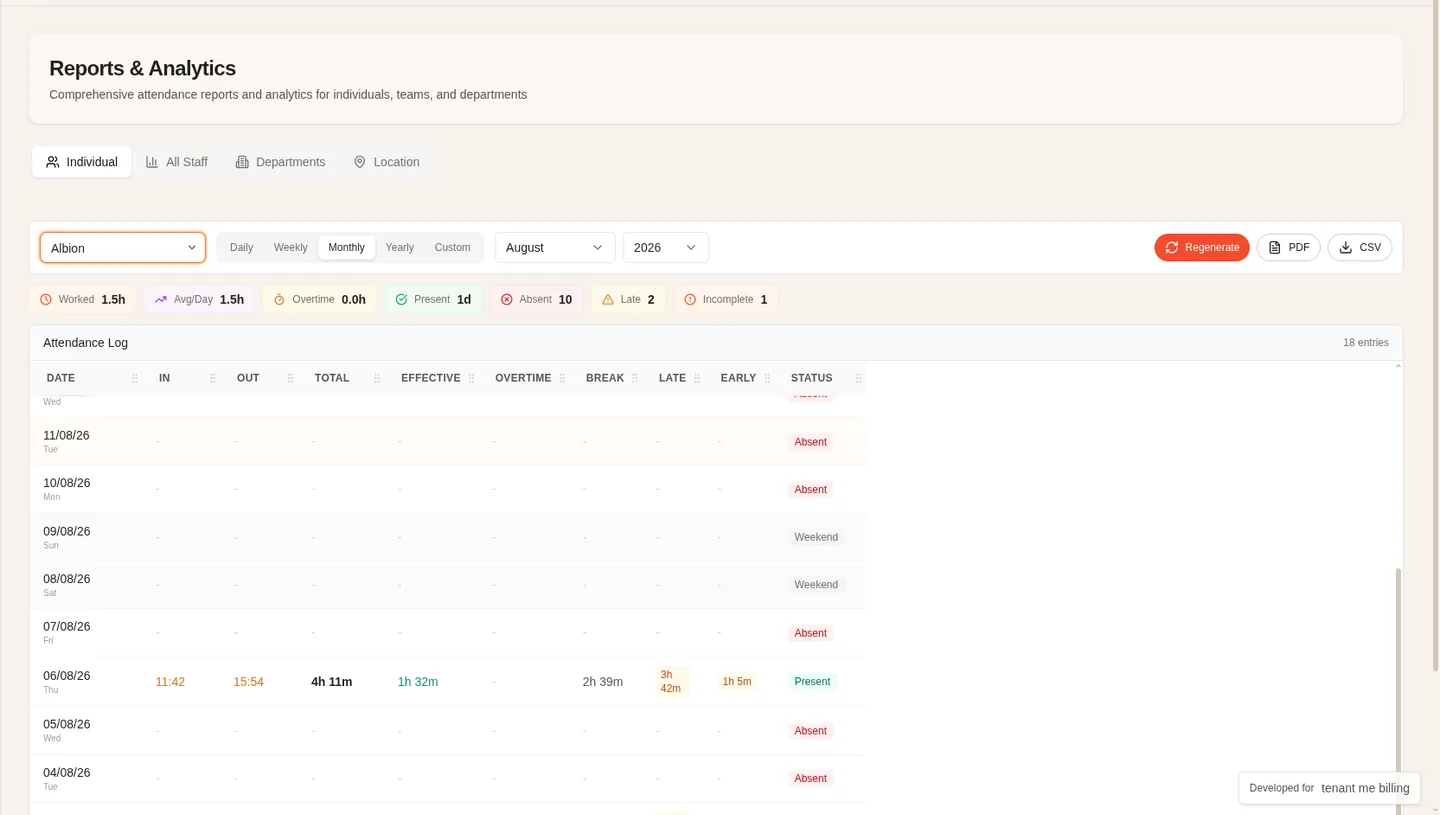
- Reports and attendance analytics
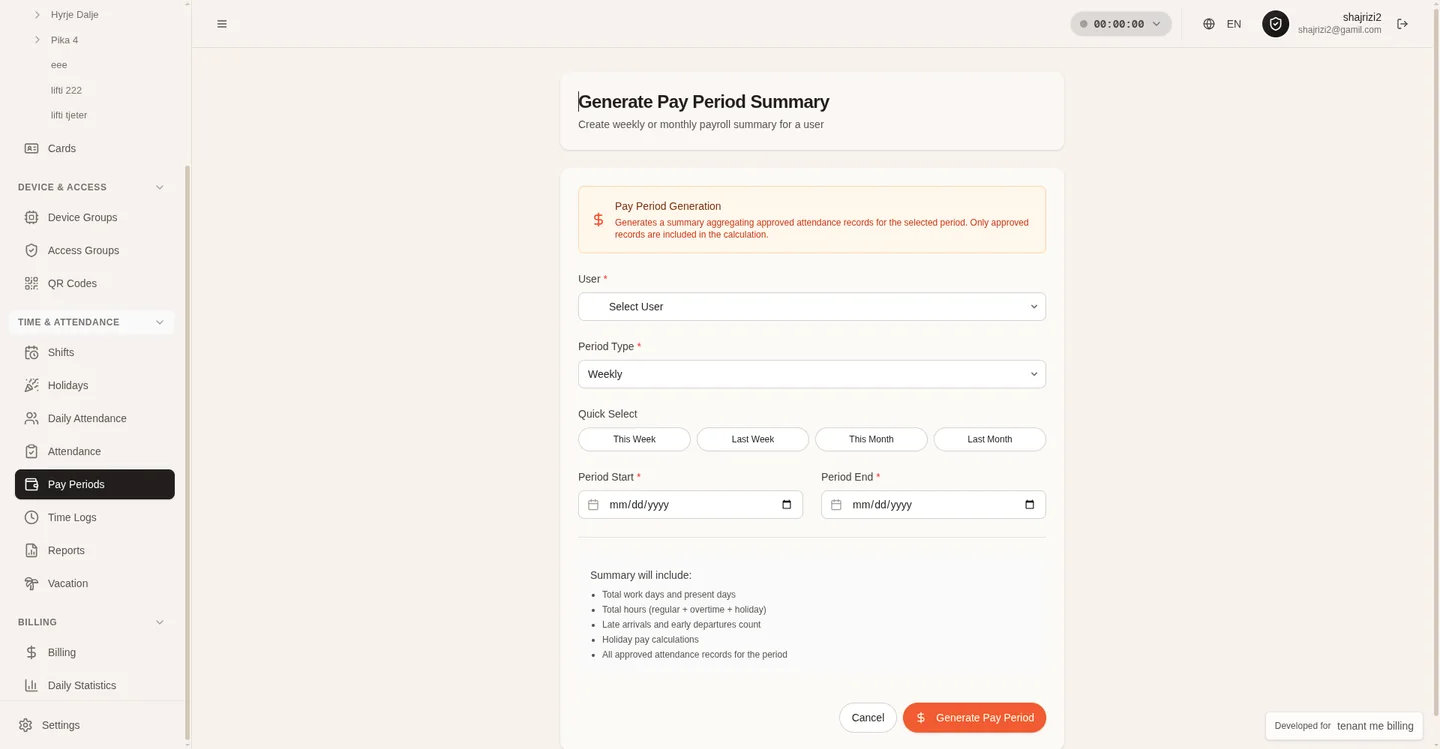
- Pay-period and wage calculations based on attendance information
Architecture and integration work
The product uses a Next.js frontend and a NestJS API on EKS, with Prisma and PostgreSQL for workforce, attendance and payroll records. SQS separates device-event intake from background processing; DynamoDB tracks device cursors and deduplication state. Pino provides structured application logging.
Lambda handles scheduled exports, S3 stores generated reports and SNS distributes operational alerts. These services support the core application while PostgreSQL remains the source of truth for business records.
I also integrated Claude into an adapter layer to assist with extending support and onboarding for additional attendance-device types. The AI-assisted workflow supports the engineering process; it does not autonomously control devices.
AWS architecture
The NestJS API runs on EKS, with SQS for attendance-event processing and Lambda for scheduled report exports.
- Attendance device
- NestJS API on EKS
- SQS
- Worker
- PostgreSQL
- PostgreSQL remains the source of truth for shifts, attendance, leave and payroll, accessed through Prisma. DynamoDB stores device cursors and event-deduplication state.
- S3 stores generated reports, Lambda handles scheduled exports and SNS distributes operational alerts.
Product evidence
Selected screens.
Looking for similar development capacity?
Start a conversation